
Drug possession cases in Princeton look different from those in many other towns. With a major university, several boarding schools and a steady stream of visitors, many of the people charged are students or young adults, and the drugs involved are often prescription stimulants, MDMA, cocaine or pills of uncertain origin rather than street-level heroin. Cases arise from traffic stops on Route 206 and Nassau Street, incidents at off-campus parties, searches after noise or disturbance calls and overdose emergencies.
For a student, a drug charge threatens more than a court record. It can affect enrollment, scholarships, visas, graduate school applications and future professional licenses. This page explains how Princeton drug cases are charged and how we defend them, with an eye on protecting your future. To talk about your case, call Keith Oliver Criminal Law at (609) 789-0779.
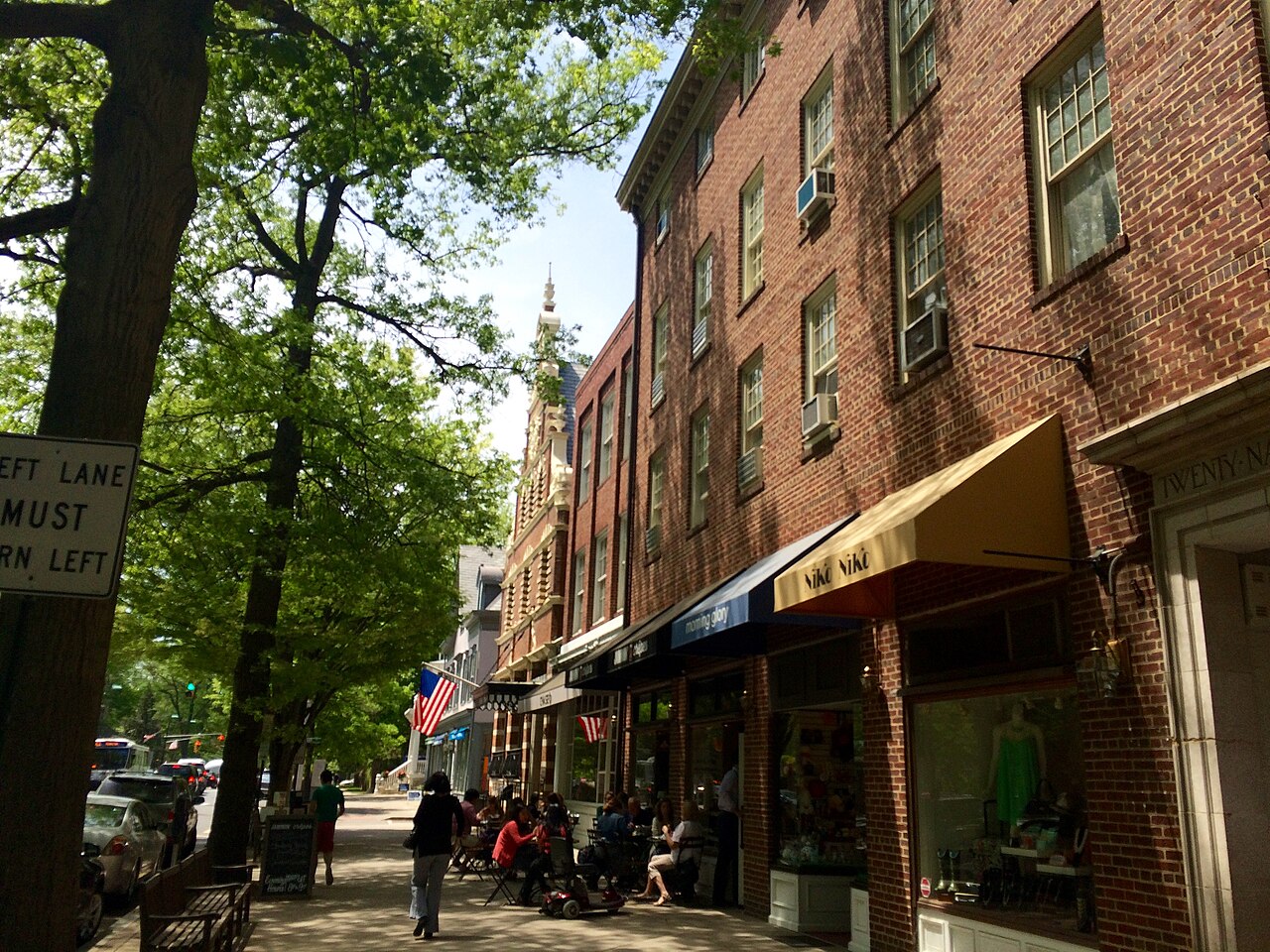
Boutiques along Nassau Street in Princeton. Photo: Djkeddie, Wikimedia Commons, CC BY-SA 4.0

What the Charge Means
Under N.J.S.A. 2C:35-10, possession of most controlled dangerous substances is a third-degree crime with three to five years of prison exposure. That covers cocaine, MDMA (molly or ecstasy), heroin, fentanyl, methamphetamine, psilocybin mushrooms and most prescription pills held without a valid prescription. Possession of more than six ounces of marijuana is a fourth-degree crime, and possession of non-cannabis drug paraphernalia is a disorderly persons offense heard in Princeton Municipal Court. Third-degree charges are indictable and go to the Mercer County Prosecutor’s Office.
Adderall and Other Prescription Stimulants
Prescription stimulants are a recurring issue in Princeton. Adderall, Ritalin and similar medications are Schedule II controlled substances. A student who has a few pills without a prescription can be charged with a third-degree crime, and one who shares them with a friend, even for free, can be charged with distribution. Students with valid prescriptions sometimes face charges because pills were found outside the labeled bottle or in someone else’s room. Pharmacy and medical records often resolve those cases. Non-controlled prescription drugs are treated much less severely, so the lab identification matters.
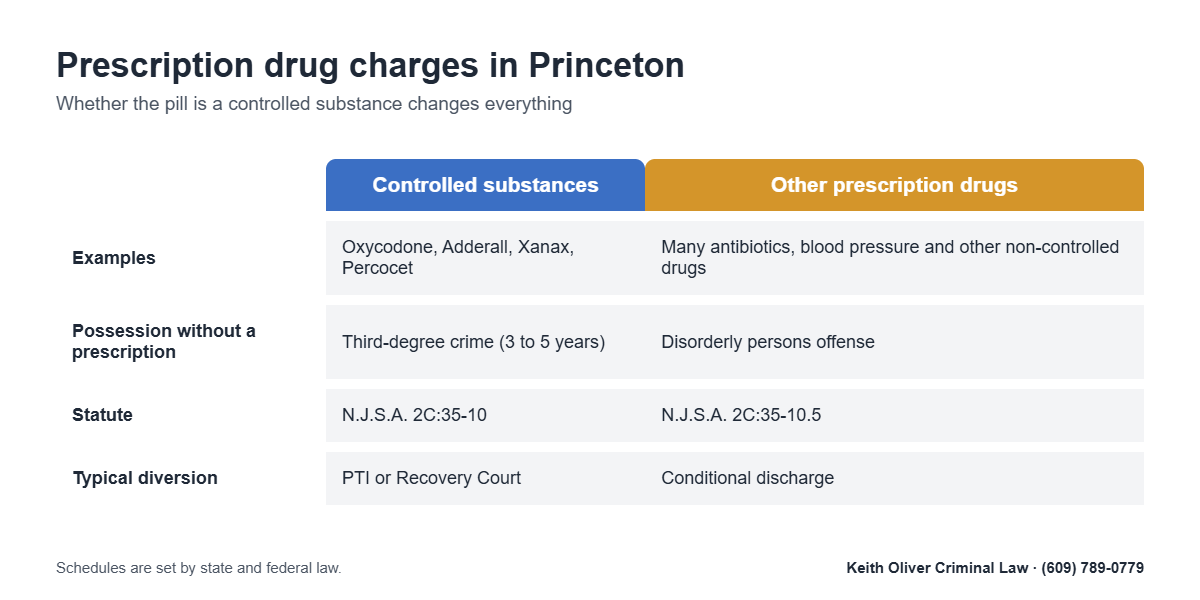
The type of prescription drug determines the charge.
MDMA, Cocaine and Party Drugs
Drugs connected to parties and events, such as MDMA and cocaine, are third-degree possession offenses even in small amounts. Larger quantities or evidence of sharing can lead to distribution charges. Many people do not know exactly what they possess: counterfeit pills and powders can contain fentanyl or other substances. The lab result may differ from what police assumed at the scene, which can change the charge. See our MDMA possession and cocaine possession pages for more.
Searches in Dorms, Apartments and Cars
How the drugs were found is often the key to the case. Police generally need a warrant to search a home or apartment, and a student’s off-campus apartment has the same protection. Searches by university staff under housing policies raise their own questions, especially when the results are turned over to police. In vehicles, New Jersey requires reasonable suspicion before police can ask for consent to search, bars searches based solely on the odor of marijuana, and limits warrantless searches to probable cause arising from unforeseeable circumstances. When those rules are broken, a motion to suppress can end the case.
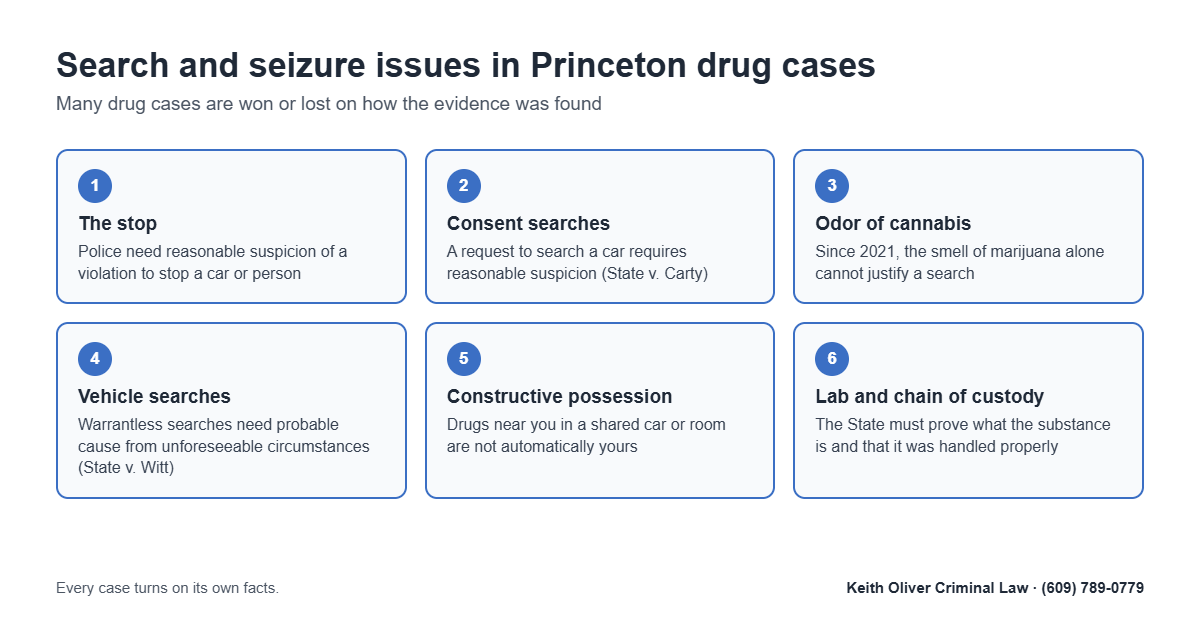
Search and seizure issues that often decide Princeton drug cases.
Overdose Calls and the Overdose Prevention Act
New Jersey’s Overdose Prevention Act encourages people to call for help in an overdose emergency. A person who seeks medical assistance for someone experiencing an overdose, and the person who overdosed, are generally protected from charges of simple possession and certain related offenses based on evidence discovered because help was sought. Students who called 911 for a friend should know about this protection. The law has limits, but it applies in many campus and party situations.
Student Discipline and the Court Case
A university or boarding school may open its own disciplinary process, which can move faster than the court case and uses a lower standard of proof. Statements made in a campus meeting can be used in court. We advise students on how to approach school proceedings without harming the defense, and on how the timing of the two processes can be managed. The goal is to protect both the student’s record and their standing at school.
International Students and Visa Consequences
For non-citizens, drug offenses are among the most serious immigration triggers. Even a minor controlled substance conviction, and in some cases an admission of drug use, can affect visa status, re-entry and future applications. International students should not enter any plea or sign any statement without first talking to a criminal lawyer and, where needed, an immigration lawyer. Diversion programs and outcomes that avoid a conviction can be especially important for them.
Diversion: Keeping a Clean Record
Most first-time Princeton drug defendants have paths that avoid a conviction. Pretrial Intervention is available for many indictable possession charges and results in dismissal after successful supervision. Conditional discharge applies to eligible disorderly persons drug offenses. Both are generally one-time opportunities, and they work best when combined with evidence of good character, academic standing and, where appropriate, a substance use evaluation.
Penalties If Convicted
A drug conviction carries a mandatory Drug Enforcement and Demand Reduction penalty and a lab fee, along with any fine or sentence. The more lasting harm is the record itself, which can appear on background checks for graduate programs, employers and licensing boards. That is why the focus in a student case is almost always on avoiding a conviction rather than simply minimizing the sentence.
Out-of-State Students and Visitors
Many people charged in Princeton live elsewhere. A New Jersey drug charge does not go away when you leave the state, and missing a court date can lead to a warrant. A lawyer can often handle much of the case for you, coordinate dates around academic calendars and keep trips to New Jersey to a minimum.
Defenses in Princeton Drug Cases
- Unlawful search. Searches of homes, rooms or cars that violated constitutional rules.
- No knowing possession. Drugs in shared rooms, cars or bags that belonged to someone else.
- Valid prescription. Medication prescribed to the person charged.
- Lab and chain of custody. Errors in identifying or handling the substance.
- Overdose protection. Evidence found because someone called for medical help.
What to Do Now
Do not discuss the incident with roommates, friends or school officials before talking to a lawyer. Do not post about it or delete messages, which can create new problems. Write down what happened, including how police or staff entered and whether you were asked for consent. Gather any prescriptions and bring your paperwork to a consultation.
Marijuana in Princeton: Legal, With Limits
Adults 21 and older may legally possess up to six ounces of marijuana in New Jersey, and regulated cannabis is sold at licensed dispensaries. But that does not end every issue. Universities can prohibit cannabis on campus and in student housing, and they may discipline students under their own policies. People under 21 receive written warnings rather than charges for possession or use, but they can still face school consequences. Possession of more than six ounces is a fourth-degree crime, unlicensed sales remain illegal, and driving while impaired by cannabis is a DWI. For international students, cannabis use can still create immigration issues because it remains illegal under federal law.
Working Around the Academic Calendar
Court dates do not always fit around exams, breaks and study abroad. We work to schedule appearances so that students can stay on track academically, and we keep families informed when the student is out of state. Early planning prevents missed dates, which can create far bigger problems than the original charge.
Princeton Drug Possession FAQs
Is having Adderall without a prescription a crime?
Yes. Adderall is a Schedule II controlled substance, so possession without a prescription is generally a third-degree crime.
Will a drug charge get me expelled?
Schools have their own processes. Get legal advice before any school meeting so you do not harm your defense.
Am I protected if I called 911 for a friend who overdosed?
New Jersey’s Overdose Prevention Act generally protects both of you from simple possession charges based on evidence found because of the call.
Can international students be deported for a drug charge?
Drug offenses carry serious immigration risks. Talk to a lawyer before any plea or statement.
Can a first drug charge be dismissed?
Often, through PTI, conditional discharge or a successful suppression motion.
Drug and Marijuana Defense Across Mercer County
We also defend drug and marijuana charges in:
- Ewing drug possession
- Ewing prescription drug charges
- Hamilton drug charges
- Hightstown drug charges
- Robbinsville drug crimes
- West Windsor drug possession
- Trenton heroin possession
- Ewing marijuana charges
- Hamilton marijuana charges
- Lawrence marijuana charges
For the statutes and county-level information, see our Mercer County drug charges page.
Talk to a Princeton Drug Defense Lawyer
For students, visitors and residents, a Princeton drug charge can usually be resolved without a lasting record if it is handled carefully. Keith Oliver Criminal Law defends drug charges in Princeton and across Mercer County. Call Keith Oliver Criminal Law at (609) 789-0779 or contact us online.