
Prescription drug charges catch many people off guard. The pills are legal medicine, prescribed by doctors every day, so it can be a shock to be arrested for having them. But in New Jersey, possessing certain prescription medications without a valid prescription, or giving them to someone else, can be a serious crime. In Ewing Township, these cases come up during traffic stops on Route 31 and Interstate 295, searches of cars and apartments, incidents near The College of New Jersey and investigations involving pharmacies and doctors’ offices along Olden Avenue and Parkway Avenue.
This page explains the difference between controlled and non-controlled prescription drugs, the charges that can follow, the defenses that often apply and the programs that can keep a conviction off your record. To talk about your case, call Keith Oliver Criminal Law at (609) 789-0779.
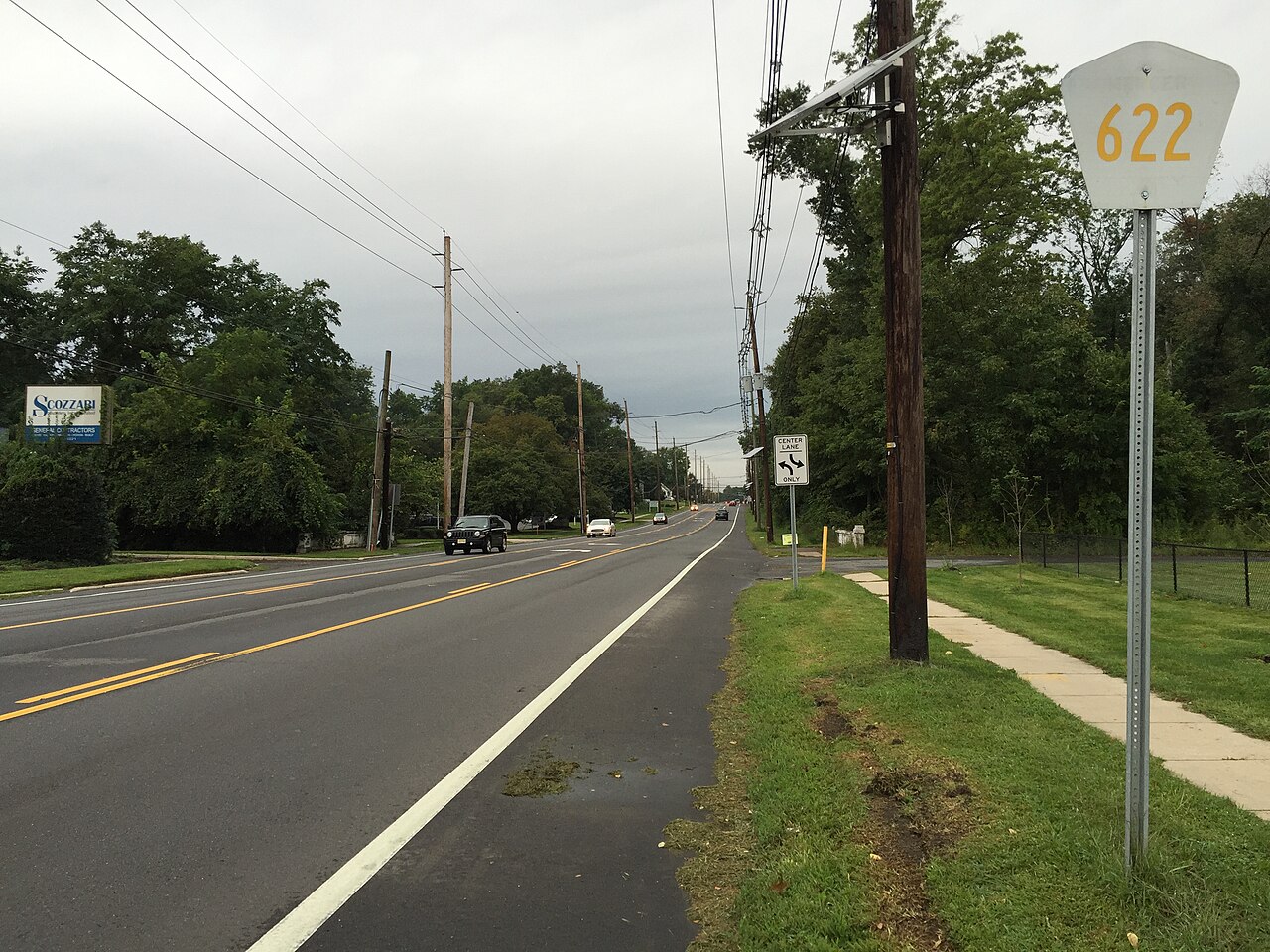
North Olden Avenue in Ewing Township. Photo: Famartin, Wikimedia Commons, CC BY-SA 4.0

Controlled Substances vs. Other Prescription Drugs
The first question in any prescription drug case is what the pill actually is. New Jersey divides prescription medications into two broad groups:
- Controlled dangerous substances (CDS). Opioid painkillers such as oxycodone and hydrocodone, stimulants such as Adderall, and benzodiazepines such as Xanax are scheduled drugs. Possessing them without a valid prescription is generally a third-degree crime under N.J.S.A. 2C:35-10, with three to five years of prison exposure.
- Prescription legend drugs. Medications that require a prescription but are not controlled, such as many antibiotics and blood pressure drugs, fall under N.J.S.A. 2C:35-10.5. Unlawful possession is generally a disorderly persons offense heard in municipal court, though distributing them can be more serious.
Because the grade depends on the drug, the lab analysis is critical. Pills are sometimes identified at the scene by their imprint, but a proper laboratory test is needed to prove what they are. See our Mercer County prescription drug page for more about the statutes.
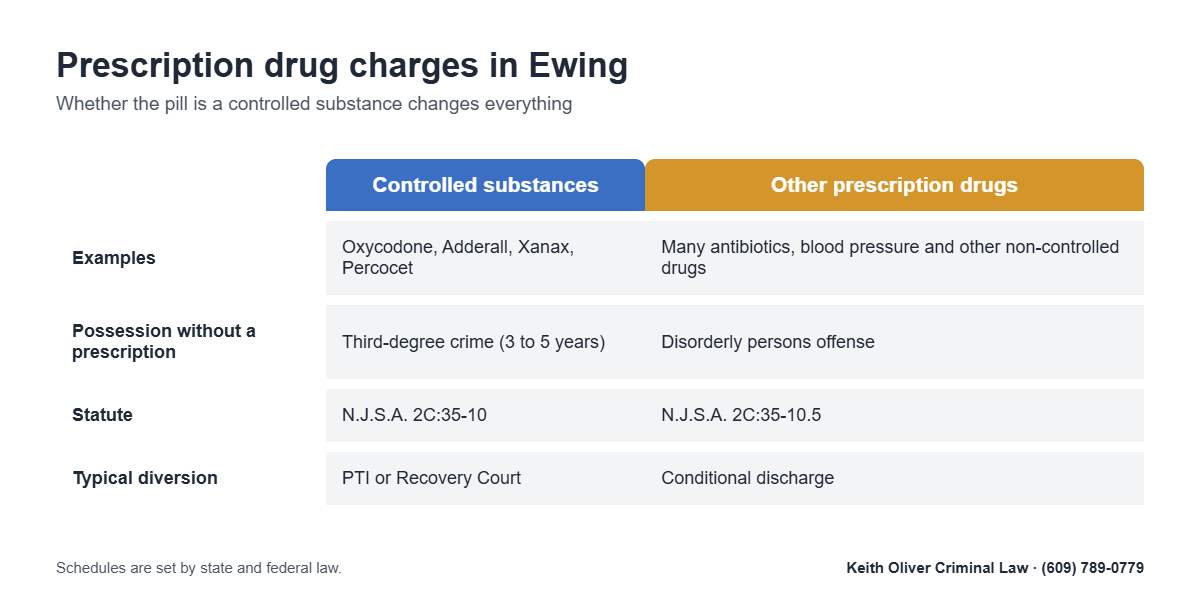
Controlled and non-controlled prescription drugs are charged very differently.
Having a Prescription Is a Defense
If you have a valid prescription for the medication, possessing it is not a crime. Problems arise when pills are kept in a pill organizer, a plastic bag or someone else’s bottle, or when a person is carrying a family member’s medication. In those situations, police may charge first and leave it to the defense to sort out. Pharmacy records, the prescribing doctor’s records and insurance claims can establish that the prescription was valid and current. If the medication was prescribed to a family member you care for, the facts and documentation become especially important.
Sharing Pills Can Be Distribution
One of the most common surprises in prescription cases is that giving a pill to a friend can be charged as distribution, even if no money changed hands. Handing a roommate an Adderall before an exam or giving a friend a painkiller after an injury can be treated as distributing a controlled substance, which is graded more harshly than simple possession. For college students, this scenario comes up often. Our prescription drug distribution page explains how those charges work.
Fraud and Forged Prescriptions
Some prescription cases involve allegations that a person obtained medication by fraud: altering a prescription, using a forged prescription pad, impersonating a doctor’s office on the phone or “doctor shopping” by getting overlapping prescriptions from several providers. These cases are charged under N.J.S.A. 2C:35-13 and often rely on pharmacy surveillance video, the state’s prescription monitoring records and testimony from pharmacists. They raise questions about identity, knowledge and the reliability of records. See our obtaining CDS by fraud page for more.
How Ewing Prescription Cases Are Handled
A disorderly persons charge, such as possession of a non-controlled legend drug, is heard in Ewing Municipal Court at 2 Jake Garzio Drive. Many of that court’s regular sessions are held on Zoom. A third-degree charge for possessing a controlled pill is indictable, so it goes to the Mercer County Prosecutor’s Office, which may present it to a grand jury, divert it or downgrade it back to municipal court.
Diversion Programs That Can Lead to Dismissal
Prescription drug cases are often good candidates for diversion, especially when the person has no prior record:
- Conditional discharge for eligible disorderly persons drug offenses, ending in dismissal after a period of supervision.
- Pretrial Intervention (PTI) for eligible indictable charges, also ending in dismissal on successful completion.
- Recovery Court for people whose charges are connected to a substance use disorder, including opioid dependence that began with a legitimate prescription.
Many prescription cases involve people who became dependent on medication after an injury or surgery. Treatment-focused outcomes often serve everyone better than a conviction.
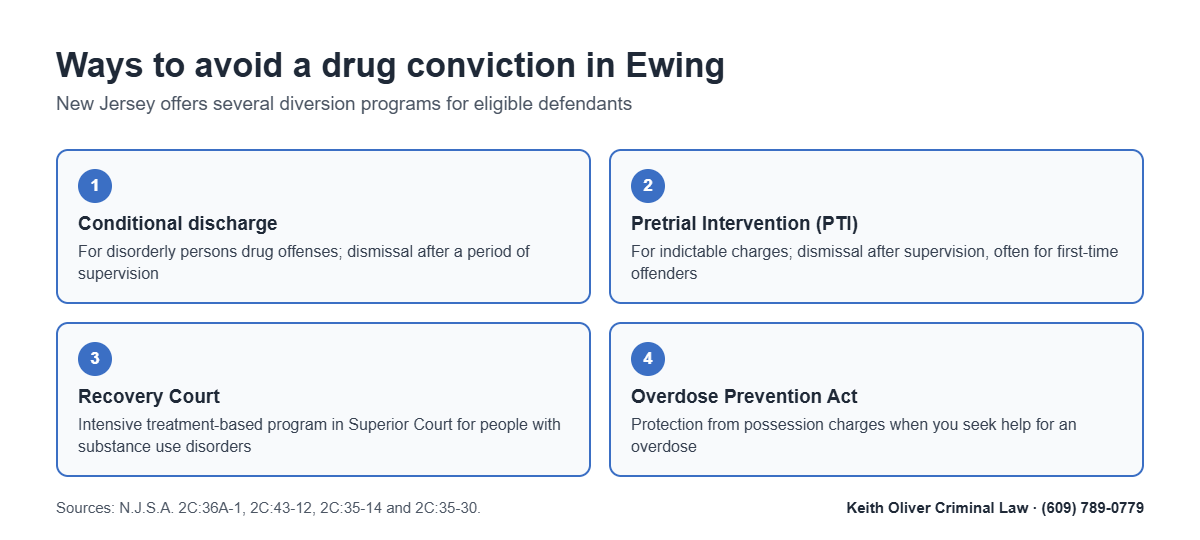
Diversion options that can end a drug case without a conviction.
Defending the Search
Prescription pills are usually discovered during a search: of a car, a bag, a pocket or a home. The same constitutional rules apply as in any drug case. Police need a lawful basis for the stop, reasonable suspicion before asking for consent to search a vehicle, and probable cause for a warrantless search. A motion to suppress evidence found in an unlawful search can end the case. The smell of marijuana alone no longer justifies a search in New Jersey, which affects many vehicle cases.
Professional and Immigration Consequences
Prescription drug convictions are particularly damaging for nurses, pharmacists, doctors, and other licensed professionals, whose boards often treat drug offenses seriously. Commercial drivers and people in safety-sensitive jobs face similar concerns. For non-citizens, controlled substance offenses are among the most serious immigration triggers. Anyone in these groups should get advice before entering any plea, even to a disorderly persons offense.
Medical Conditions and Treatment
If you are dealing with pain, anxiety, ADHD or another condition that led to the medication, that context matters. Documentation from your doctor, evidence of treatment and a plan for ongoing care can influence how prosecutors and judges view the case, especially in diversion applications. Getting a substance use evaluation early, when appropriate, can also strengthen an application for PTI or Recovery Court.
What to Do Now
Gather any prescriptions, pharmacy receipts or medication histories that relate to the pills involved. Do not discuss the case with friends or post about it. If the pills belonged to someone else, do not contact that person about the case without talking to your lawyer first. Write down how the stop or search happened while you remember it clearly, and bring all paperwork to your consultation.
Stimulants on Campus
With The College of New Jersey in town, prescription stimulant cases are a recurring issue in Ewing. Medications such as Adderall are sometimes shared or sold among students around exam periods. Because these are Schedule II controlled substances, possession without a prescription is a third-degree crime, and passing them to someone else can be charged as distribution. Students also face campus conduct proceedings, and statements made there can be used in court. A student with a valid prescription who shares a few pills may be surprised by how seriously the law treats it, but these cases often resolve well with early advice and, where appropriate, diversion.
Opioids and Fentanyl-Pressed Pills
Counterfeit pills made to look like oxycodone or other medications sometimes contain fentanyl. When police seize pills that look like a prescription drug, the lab result may show something entirely different, which can change the charge and the risks involved. If the person charged believed the pills were legitimate medication, that belief can matter to the defense, and it is also a reason to consider treatment and safety resources. Accurate lab testing is essential in these cases.
Bring Your Records
For your consultation, bring any prescription labels, pharmacy printouts, doctor’s notes or insurance statements showing the medication you were prescribed. If the pills were a family member’s, bring whatever shows that relationship and the caregiving role.
Ewing Prescription Drug FAQs
Is it illegal to carry my own pills outside the bottle?
Possessing medication prescribed to you is not a crime, but you may need pharmacy records to prove the prescription if you are charged.
Is giving a friend one pill really distribution?
It can be. Distribution does not require a sale.
What is a prescription legend drug?
A medication that requires a prescription but is not a controlled substance. Unlawful possession is usually a disorderly persons offense.
Can a prescription drug charge be dismissed?
Yes. A valid prescription, a suppression motion or diversion through PTI or conditional discharge can all lead to dismissal.
Will a conviction affect my nursing license?
It can. Licensed professionals should get legal advice before any plea.
Drug and Marijuana Defense Across Mercer County
We handle drug and marijuana charges throughout Mercer County, including:
- Ewing drug possession
- Hamilton drug charges
- Hightstown drug charges
- Princeton drug possession
- Robbinsville drug crimes
- West Windsor drug possession
- Trenton heroin possession
- Ewing marijuana charges
- Hamilton marijuana charges
- Lawrence marijuana charges
For the statutes and county-level information, see our Mercer County drug charges page.
Speak With a Ewing Prescription Drug Lawyer
A prescription drug charge often has an explanation that the arrest report leaves out. Keith Oliver Criminal Law defends prescription drug charges in Ewing and across Mercer County. Call Keith Oliver Criminal Law at (609) 789-0779 or contact us online.