
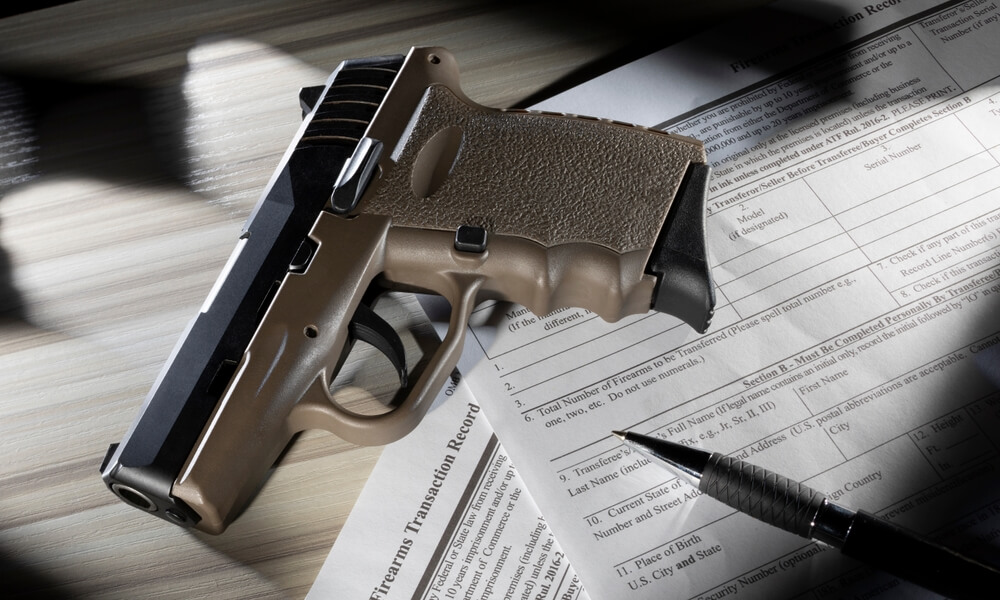
An arrest does not automatically mean prosecutors can use every piece of evidence against you. If law enforcement gathered evidence by violating your Constitutional rights, then you may have grounds to file a motion to suppress evidence and ask the court to exclude it from your case.
The defense attorneys at Keith Oliver Criminal Law review every detail of each case to determine whether law enforcement violated New Jersey law. If you are facing criminal charges in New Jersey and believe that police violated your rights, contact us so we can discuss your case and your defense options.
What Is a Motion to Suppress?
Police and other law enforcement officers must follow the United States Constitution and the New Jersey Constitution when collecting evidence. A motion to suppress evidence made by a person charged with a crime asks the court to exclude certain evidence obtained from an illegal search, seizure, interrogation, or other unlawful police conduct. If the judge grants the motion, the prosecution may not have enough evidence to prove its case.
Vehicle Searches in Gun Cases
Many New Jersey firearm arrests begin with a traffic stop, followed by a vehicle search. Police may discover a weapon:
- Inside the glove compartment
- In the center console
- Under a seat
- Locked in a trunk
- Hidden in a backpack or other container inside the vehicle
Whether the vehicle search was lawful depends on the specific facts. Officers need legal justification before searching a vehicle, whether that is based on a valid warrant or an exception to the warrant rule. An experienced criminal defense lawyer will ask:
- Why did the officer stop the vehicle?
- Did police get anyone’s consent to search?
- Was the consent voluntary?
- Did officers go beyond the legal scope of the search?
- Did an exception allow a warrantless search?
Your attorney will review evidence such as police reports, forensics, camera footage, and witness statements to determine whether a suppression motion may be appropriate.
Unlawful Stops and Probable Cause
Every search requires legal justification, but the specifics can vary based on the unique case. For example, police must have reasonable suspicion to stop and detain you, or probable cause for searches and arrests.
Reasonable suspicion is a lower standard than probable cause. It requires specific facts suggesting that criminal activity is happening. Probable cause requires stronger evidence. For example, your criminal defense attorney may file a gun evidence suppression motion on your behalf if:
- A law enforcement officer lacked reasonable suspicion to initiate a traffic stop
- Police prolonged a traffic stop without legal justification
- Officers relied on vague or inconsistent observations
- The facts described in police reports don’t match the available video evidence
- Police conducted a search before developing probable cause and made an unreasonable seizure
If the initial stop violated your Constitutional protections, any evidence the police discover afterward may also be suppressed. Courts often analyze each step of the investigation to determine whether later evidence resulted from violations of the defendant’s constitutional rights.
Search Warrants and Home Searches
Some firearm investigations involve a search warrant at a home or other private property. Judges issue warrants after reviewing sworn applications, but the existence of a warrant does not automatically make every search lawful. A court will review whether:
- The warrant established probable cause
- Law enforcement searched permitted locations
- Police seized property outside the warrant’s scope
- Officers properly executed the warrant
- The supporting affidavit contained false or misleading information
Police sometimes conduct warrantless searches based on consent or claimed emergency circumstances. Monmouth County courts look carefully at those cases. Private homes have some of the strongest Constitutional protections against unreasonable searches.
Constructive Possession Issues
Finding a firearm near someone does not necessarily prove that they possessed the weapon. New Jersey recognizes constructive possession. This concept means prosecutors may argue that someone had control over a gun, even if they weren’t physically holding it. This might apply when police recover a gun from shared vehicles or residences.
Prosecutors need evidence connecting the firearm to a particular person. Constructive possession disputes often overlap with a motion to suppress evidence in gun cases. If police unlawfully searched the area where a firearm was discovered, a gun suppression motion might prevent the prosecution from using the firearm as evidence that it was used to commit a crime.
Graves Act Consequences
Many New Jersey gun crimes have serious sentencing consequences under the Graves Act. These convictions can result in mandatory prison time and parole ineligibility. If a suppression motion succeeds, that might result in:
- The prosecution losing key evidence
- Certain charges being more difficult to prove
- The prosecution reevaluating the case
- Better plea deal terms and conditions
Every case presents different legal issues, so no outcome is guaranteed. However, Keith Oliver Criminal Law has successfully represented clients facing serious criminal charges involving firearms. In one Monmouth County case, a client’s gun charges were dismissed after a motion to suppress was filed.
Suppression Hearings in Monmouth County
Indictable gun cases in Monmouth County are generally handled in the Superior Court, Criminal Division, located in Freehold. When a court schedules a suppression hearing, both sides present evidence and legal arguments.
During the hearing, the court may:
- Hear testimony from police officers
- Review body or dashboard camera footage
- Look over any search warrants and affidavits
- Examine key evidence
- Listen to legal arguments from both sides
After the hearing, the judge decides whether the firearm or other challenged evidence may be admitted at trial.
Working with an experienced criminal defense attorney at Keith Oliver Criminal Law is the best way to protect your rights. One former client wrote, “From day one, my attorney handled the charges and downgraded them to a more appropriate outcome! He explained how things worked and what to expect in court. I was notified of upcoming court dates and the exact time to be there. I was represented professionally and accurately. The outcome of my case was a win, and I only needed to pay a fine. I would definitely recommend Keith Oliver for your defense!” Another client noted, “Keith Oliver…was very understanding of my situation from the beginning…Although the charges I was facing were very serious and scary to think about, Keith put his best foot forward…All in all, if there were 100 stars he could’ve gotten on this review, he would deserve every single one and more.”
If you’re facing criminal charges involving firearms in New Jersey, Keith Oliver Criminal Law can evaluate whether a motion to exclude evidence seized by police may help your case. Contact us today for a free consultation to discuss your criminal case.